Got Questions? We’ve Got Answers!
Find quick answers to common questions about our mobile chicken sheds, shipping, assembly, and daily operations. Browse the categories below to learn more about how a Chicken Caravan can integrate into your farm, and contact our support team if you need further assistance.
Buying, Shipping and Assembling Questions
Chicken Caravan manufactures and sells the following products:
Movable, free-range chicken sheds and coops
Nesting box systems
Chicken-specific feeders
Additionally, we stock and supply a range of complementary poultry farming equipment, including:
Electric fencing
Energisers
Various feeding accessories
And more!
The exact number of chickens you can comfortably fit depends entirely on which specific model you are using! To make things easy, our caravans are named directly after their recommended flock capacities.
Here is a general guide to our sizes:
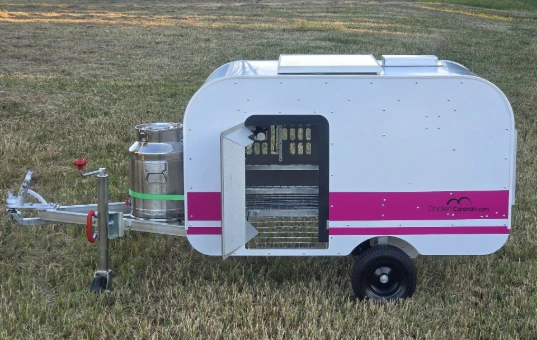
Chicken Caravan 10: Designed for up to 10 standard laying hens.
Chicken Caravan 30: Designed for up to 30 standard laying hens.
Chicken Caravan 130: Designed for up to 130 standard laying hens.
Chicken Caravan 450: Designed for commercial flocks of 450 standard laying hens
Chicken Caravan 600: Designed for commercial flocks of 600 standard laying hens
Important factors to keep in mind regarding capacity:
Please check your local regulations on hen capacity for outside area, as well as roosting and nesting capacities.
You can reach our customer support team by emailing support@chickencaravan.com or calling 1300 655 735.
Alternatively, through our website form here.
Once you have agreed to the quote you have been supplied, we will work out an estimated date for delivery. A deposit of 50% of the invoice will be required along with a signed copy of our terms and conditions to secure your order. The remaining 50% amount will be paid and cleared prior to dispatch.
Yes we do sell our flat pack Chicken Caravans overseas. The assembled Chicken Caravans are available in Australia only. Our smaller items like electric fencing and energisers, we do not sell overseas as generally their freight costs are to high. We recommend sourcing those products locally.
Our flat-pack Chicken Caravans are engineered with high-quality components and precision laser-cut sheet metal, making them advanced assemblies rather than simple, basic kits. Because of the heavy-duty materials and construction involved, putting them together requires individuals who are physically fit and mechanically minded. We provide instruction manuals to guide you through the process, and of all our models, the compact Chicken Caravan 10 is by far the quickest and easiest to assemble.
For our Australian customers: Yes, you can buy it already assembled! We can build your caravan for you right here at our workshop. If you would prefer to skip the assembly process entirely, please get in touch with us to request a custom assembly quote and shipping cost to your location.
To complete your Chicken Caravan 450 you will need to source the roof sheets separately. This is due to freight limitations, as the sheets are to long to be shipped with the remaining components.
The specifications for the CC450 are as follows:
⦁ Product: Lysaght Trimdek
⦁ Material: Zincalume or Colorbond
⦁ Width: Standard Nominal Cover 762mm
Option 1: No join
⦁ 3 Sheets at 8020mm length
Option 2: With join
⦁ 3 Sheets at 3525mm length
⦁ 3 Sheets at 4610mm length
Lysaght products are widely available across Australia, and you can source these sheets from most roofing or building supplies stores.
Please ensure that you specify the correct lengths and product type when ordering. Lysaght Trimdek link: https://lysaght.com/profiles/trimdek#variant-trimdek-0
To complete your Chicken Caravan 600 you will need to source the roof sheets separately. This is due to freight limitations, as the sheets are to long to be shipped with the remaining components.
The specifications for the CC600 are as follows:
⦁ Product: Lysaght Trimdek
⦁ Material: Zincalume or Colorbond
⦁ Width: Standard Nominal Cover 762mm
Option 1: No join
- 3 Sheets at 10280mm length
Option 2: With join
⦁ 3 Sheets at 5790mm length
⦁ 3 Sheets at 4610mm length
Lysaght products are widely available across Australia, and you can source these sheets from most roofing or building supplies stores.
Please ensure that you specify the correct lengths and product type when ordering. Lysaght Trimdek link: https://lysaght.com/profiles/trimdek#variant-trimdek-0
General Operation Questions
For the best pasture health and to keep your chickens foraging on fresh grass, we recommend moving the caravan every few days to a week. The exact frequency depends on the size of your flock, the specific model you own, and the condition of your pasture. Regular movement prevents manure build-up and completely eliminates the compacted, bare dirt associated with stationary coops.
It depends on the model! Our compact setups, like the Chicken Caravan 10 and 30, are lightweight and easily wheeled to fresh grass by hand if you are physically capable. Alternatively, you can tow them behind a quad bike or ride on mower. Our larger commercial models are designed to be towed smoothly with a tractor or 4wd, depending on the towing capacity of your vehicle.
Because our Chicken Caravans feature specialized mesh floors, the majority of the manure falls straight through to the pasture below. This design completely eliminates the need for the tedious, weekly coop scraping associated with traditional sheds!
For routine upkeep and deeper cleans, here is the standard process:
Routine Maintenance
Nesting Mats: Simply shake out the nesting mats as needed to remove dust, feathers, or debris. If they become soiled, they can easily be pulled out and hosed off.
Feeders and Drinkers: It is good general practice to regularly clean out your water drums and wipe down feeders to prevent algae or mould build-up and keep your flock healthy.
Deep Cleaning (Annual Maintenance or Between Flocks)
If you are doing an annual deep clean or preparing the caravan for an entirely new flock of birds, a standard pressure washer will do the vast majority of the work.
Dry Clean First: Use a stiff brush or scraper to knock off any stubborn, dried-on organic matter or dirt before getting the inside of the caravan wet.
Pressure Wash: Blast the interior and exterior with a pressure washer or a high-pressure hose to quickly wash away the remaining mess.
Sanitize: Apply a poultry-safe, agricultural-grade disinfectant to sanitize the surfaces.
Dry: Let the caravan air-dry completely in the sun before moving your new flock inside.
Note: Always ensure you follow your local biosecurity guidelines and government regulations regarding poultry hygiene and farm management.
While our Chicken Caravans include built-in features designed to help protect your flock—such as elevated roosts and automatic locking doors (optional on some models)—the caravan alone should not be your only line of defense.
Because some chickens may choose to sleep directly on the mesh floor where predators could potentially reach them from underneath, we strongly advise implementing the following security measures:
Electric Fencing: Always keep your Chicken Caravan inside a secure, electrified perimeter. (We stock and sell portable electric poultry fencing specifically for this purpose).
Proper Power: Ensure your energiser is powerful enough to maintain a strong charge across the entire length of your fence line.
Guardian Animals: For larger acreage or commercial flocks, integrating livestock guardian animals can be a highly effective extra layer of protection.
We recommend having a layered approach for predator protection to help keep your hens safe.
While we cannot completely guarantee that snakes will never enter your Chicken Caravan, there are several practical steps you can take to help reduce the likelihood. It is important to note that dealing with snakes is a common challenge for poultry keepers across all types of coops and sheds. However, mobile setups actually offer an advantage over traditional stationary sheds: because you move the caravan to fresh pasture frequently, you constantly disrupt the environment, making it much harder for snakes to establish nests or get comfortable nearby.
Snakes are generally attracted to chicken coops for two main reasons: an easy meal of eggs, or the presence of rodents. To minimize the risk of snakes visiting your flock, we recommend the following management practices:
Frequent Moves: Consistently moving the coop prevents the immediate area from becoming a permanent habitat for pests.
Control Rodents: Clean up spilled feed regularly and ensure your bulk feed storage is completely secure. Keeping mice and rats away removes a primary food source that draws snakes in. Our Chicken Caravan 10 and 30 models have auto closers on the feeder for this exact reason, to help reduce the amount of rodents getting in.
Collect Eggs Regularly: Frequent egg collection removes the other main attractant that brings snakes into nesting boxes.
Maintain the Perimeter: Keep the grass mown short around the immediate area of your caravan and electric fencing. Snakes prefer to travel through long grass for cover, so a clear, open perimeter acts as another layer of prevention.
Our Chicken Caravans are built with a heavy-duty, hot-dip galvanized chassis, making them stable in normal weather conditions. However, because they are a mobile structure, it is important to take precautions if high winds or severe storms are forecast.
We recommend taking the following steps to protect your caravan and your flock during a major wind event:
Move to Shelter: If possible, tow the caravan to a more protected area of your property. Positioning it behind a dense tree line, a hill, or a large building that acts as a natural windbreak is the best defence.
Strategic Parking: If you cannot move the caravan to shelter, park it so that its narrowest profile (usually the tow-hitch end) is pointing directly into the prevailing wind. This significantly reduces the surface area for the wind to catch. Be sure to close the doors down completely if necessary or open only enough for the birds to get in and out. For the CC30 is it advised to park the opposite side to the entry door towards the wind.
Use Ground Anchors: For high winds, you can use heavy-duty ratchet straps and screw-in ground anchors to tie the chassis securely to the ground.
Secure Loose Items: Ensure all doors, and access hatches are firmly latched. Pack away or tie down any external items that could become airborne, such as shade sails, portable feeders and drinkers, or lightweight fencing.
Keep the Flock Inside: If the weather is truly severe, you may choose to manually override your automatic doors and keep your chickens safely locked inside until the storm passes.
Permanent High Wind Areas: If you live in an area that frequently experiences high winds as part of your daily climate, it is advisable to have permanent tie-downs ready for your caravan every time you move it. Because geography varies so much, you will know your local weather patterns and property layout best, to ensure your hens stay safe.
While our Chicken Caravans are designed with ventilation, mesh floors, and thermal comfort in mind, extreme summer heat requires extra care to keep your flock safe and stress-free. This is necessary and good information no matter your coop set up. Here are the most important steps to take during the hotter months:
Provide Extra Shade: This is absolutely critical. While the caravan provides some shade underneath it, your chickens will need plenty of extra natural or artificial shade out in the pasture to escape the midday sun. We highly recommend positioning the caravan near large trees or setting up shade sails in their daily foraging area.
Fresh, Cool Water: Ensure your flock has constant access to clean, cool drinking water. Adding extra water stations around their shaded outdoor areas will encourage them to drink more frequently and stay hydrated without having to walk too far in the heat. Adding ice into their waterers will also help keep their drinking water temperature down.
Encourage Dust Bathing: Chickens naturally cool themselves down by taking dust baths. Make sure they have access to an area with loose, dry dirt or sand—ideally in the shade—where they can dig shallow holes and nestle into the cooler earth below the surface.
Maximize Airflow: Whenever possible, park your caravan in a location that catches the natural breeze, and ensure all vents or automated fans are unobstructed.
For a deeper dive into managing your flock during heatwaves—including tips on frozen treats, electrolytes, and summer pasture management—check out our full blog post on keeping your chickens cool in summer!
Features and Solar Tech
Please refer to your user manual that you received with your Chicken Caravan, that will have instructions on how to set up your specific control box. If you cannot find your manual, please contact us.
The exact automation features depend on the specific model and any optional extras you have purchased, but our systems are designed to save you time and streamline your daily chores. The key automated features available include:
Automatic Doors: Powered by our solar systems, these doors automatically open in the morning to let your flock out to forage, and securely close at dusk to lock them in safely away from predators. (Included in the the CC10 and CC30 models, optional in our other models. Not available for the E Coops)
Automated Lighting: Lighting systems to extend the day length in the winter months.
Off-Grid Solar Power: You do not need to run power out to your pasture! All of our electronic automation is run completely off-grid via integrated solar panels and battery systems, ensuring reliable operation wherever you park it.
Automatic Nesting Box gates: All of our Chicken Caravans and Chicken Caravan Nesting Box Systems come standard with automatic opening and closing Nesting Box Gates. These close automatically in the afternoon and reopen in the morning, preventing your chickens from roosting in them at night. This leaves them cleaner and giving you cleaner eggs and less cleaning.
The automatic doors are operated directly by the caravan's central control box. The opening and closing functions are based on the specific timing programed into this unit.
Because you have full control over the settings, you can manually set the exact schedule for when the doors open to let your flock out in the morning, and when they securely close to lock them in for the night.
Please refer to your user manual to set this feature up.
Please note: Automatic doors is included in the CC10 and CC30 models, and an optional extra on our larger models.
If your automated features are not functioning as expected, please start by referring directly to your user manual. Carefully review the setup instructions to ensure that every component has been properly installed, connected, and configured.
Often, a quick review of the manual can resolve simple calibration or connection issues. However, if you have double-checked the setup and your automation is still not working properly, please reach out and contact us! Our support team is here to help troubleshoot the issue and get your system running smoothly again.
Yes, the solar panel will still absorb daylight and generate power on cloudy or rainy days, although it will charge at a reduced rate compared to bright, direct sunlight.
However, your automation does not rely on the sun shining at that exact moment. The solar panel's job is to constantly charge the deep-cycle battery housed within your caravan.
- Battery Reserve: This battery acts as your power storage. It is specifically sized to hold enough energy to run your daily automation (like opening and closing the doors) for several days of poor weather without needing a full recharge.
- Prolonged Bad Weather: If you experience an extreme stretch of heavy cloud cover or rain that lasts for an entire week or more, the battery may eventually run low. If this happens, you can simply disconnect the battery and top it up using a suitable battery charger to keep your systems running until the sun returns.
Our automated, solar-powered lighting system gives you the flexibility to manage your hens winter laying cycle exactly how you want, accommodating different farming philosophies.
For consistent production: Chickens naturally lay fewer eggs during the winter months because there are fewer daylight hours. The lighting system can be programmed to turn on and extend the perceived "daylight" for your flock. This is especially great for regions with very short winter days, as you can program the system to extend their daylight only slightly to stimulate consistent egg laying without stressing the birds.
For a natural winter rest: If you prefer to let your hens rest "naturally" during the winter so they can molt and recover their energy, you are in complete control. You can easily adjust the settings on your control box to turn the morning/evening lighting program completely off during the colder months.
Our rollaway nesting boxes are designed to solve the problem of dirty or broken eggs. As soon as a hen lays an egg, it rolls gently down an incline into a separate, secure collection area. Furthermore, our automated control box closes the nesting box gates every afternoon. This prevents hens from sleeping (and pooping!) inside the boxes overnight, ensuring the nests are clean when the gates automatically reopen the next morning.
Our Chicken Caravan 10 and 30 models feeders feature an automatic rodent cover powered by the solar control unit. The cover automatically closes over the feed trough at night—when mice and rats are most active—and reopens in the morning when your hens are ready for breakfast.
On our larger commercial Chicken Caravans (130, 450, 600) and our larger Truss Hung Nesting Box Systems, you don't need to reach into individual boxes. The rollaway nesting boxes deposit the eggs onto a central hand wind conveyor belt. You simply stand at the egg collection section at the front of the caravan, turn the handle, and the belt brings all the clean eggs right to you for quick, easy packing into trays.
Choosing the right energiser comes down to the total length of your fence line, but there is a major catch when it comes to chickens: poultry netting requires significantly more power than standard single-wire livestock fencing.
Here is what you need to consider when selecting the right energiser for your setup:
Look at the Netting Rating, Not Just Distance: Portable poultry netting consists of multiple horizontal electrified strands. An energiser rated for "10km of fence" usually refers to a single strand of wire, and might actually only be strong enough to power one or two 50-metre rolls of netting. Always check the manufacturer's specific capacity rating for poultry netting.
The Joule Rule: As a general rule of thumb, you need an energiser with a minimum output of 0.25 joules for every 50 metres of netting. If you think you might expand your flock and add more fencing in the future, it is highly recommended to size up and buy a larger energiser now.
Account for 'Weed Load': Grass and weeds will inevitably grow and touch the lower wires of your fence, which draws power away from the system. Choosing an energiser with a bit of extra output capacity will help push through this "vegetation load" and ensure the fence stays hot enough to deter predators.
Power Source: Because your Chicken Caravan is designed to be moved frequently, a portable solar-powered energiser with an integrated battery is usually the most practical option. This allows you to rotate your pastures freely without worrying about running extension cords or relying on a mains power supply.
Please see our Fencing/Energisers page for a graph on the items we sell and the ratios needed.
The only accurate way to check your electric fence's output is by using a digital electric fence tester or fault finder. To effectively keep predators at bay, your fence needs to be genuinely "hot"—not just delivering a weak buzz.
Because chicken feathers act as natural insulators, poultry fencing requires a higher voltage than standard livestock fencing to effectively shock predators and keep the birds contained. You should aim for a minimum reading of 3,000 to 4,000 volts at any point along your fence line.
If you test your fence and the voltage is reading low, check the following three factors:
Energiser Capacity: Ensure your energiser is properly rated for the total length of the portable netting you have connected. Running a longer fence than the energiser is built for will result in a weak charge.
Vegetation and Standing Water: Grass, weeds, or branches touching the electrified strands will "short out" the fence, draining power directly into the ground and significantly dropping the voltage. Similarly, running your fence through deep puddles or standing water can submerge the lower live wires and short out the entire system. Always keep your perimeter clear, mowed, and positioned away from boggy, flooded areas.
Earthing System: A poor earth connection is one of the most common causes of low fence power. Ensure your earth stake is driven deep into the ground (ideally in damp soil) and is securely connected to the energiser.
Please see our Fencing/Energisers page for a graph on the items we sell and the ratios needed.